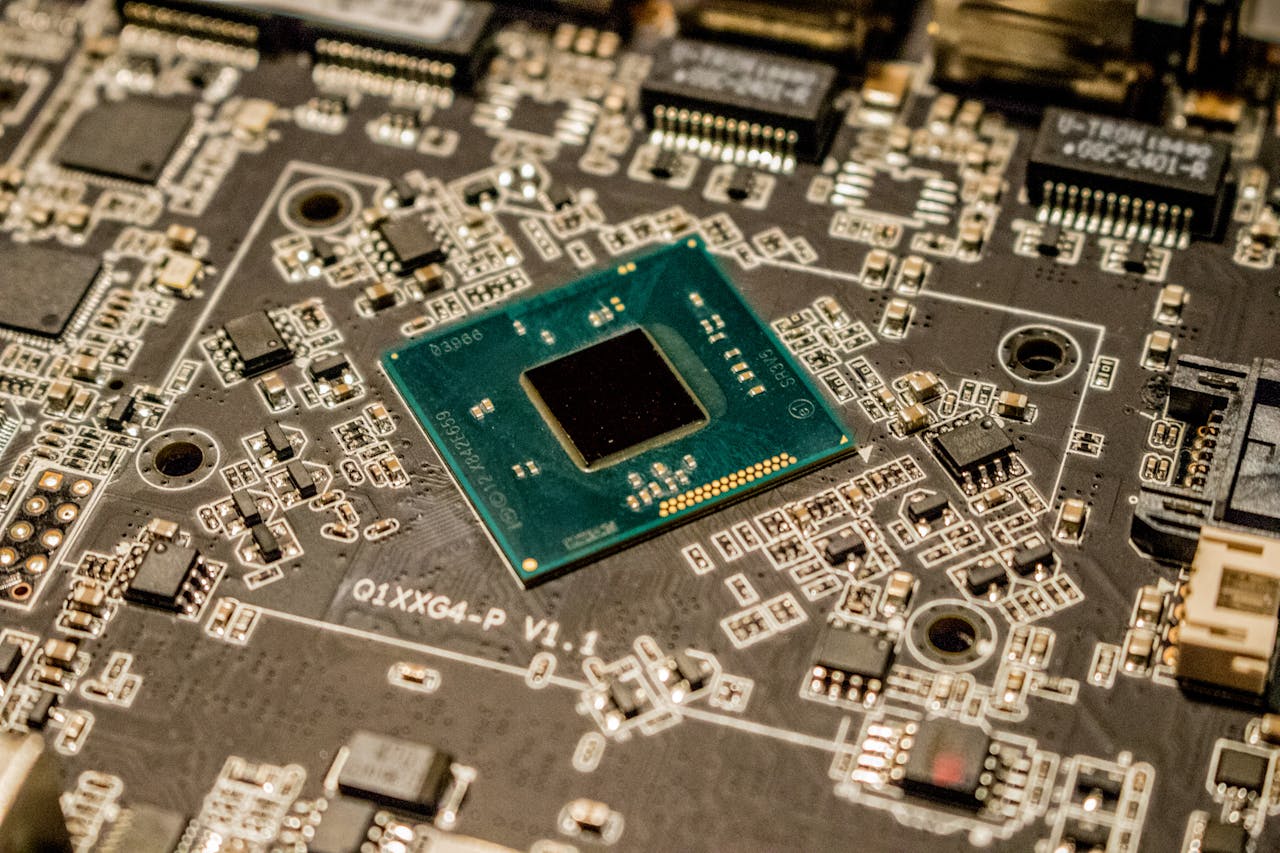
| Image credits: Circuit-board by Jeremy Waterhouse
On December 1, 2024, China implemented updated Regulations on Export Control of Dual-Use Items. These rules aim to strengthen national security, enhance regulatory efficiency, and align with global export control standards. Dual-use items refer to goods, technologies, and services applicable to both civilian and military uses.
Key aspects of the new regulations include:
-
Consolidation of existing export control frameworks into a unified system.
-
Introduction of simplified licensing processes.
-
Enhanced oversight of high-tech sectors such as semiconductors and AI.
These measures are part of China’s broader efforts to streamline its export control systems and promote global non-proliferation cooperation.
KEY PROVISIONS OF THE NEW REGULATIONS
SCOPE OF CONTROLLED ITEMS
Dual-use items are classified into:
-
Listed Items: Items on the “List of Dual-Use Items Subject to Export Control.”
-
Temporary Controls: Goods or technologies added temporarily to safeguard national interests.
The List of Dual-Use Items, announced on November 15, 2024, consolidates previously dispersed controls into ten industry sectors and five categories, maintaining a total of approximately 700 controlled items.
LICENSING SYSTEM
Exporters must apply for licenses, categorized as:
-
Single License: For one-time exports with a one-year validity.
-
General License: For recurring exports to approved entities, valid up to three years.
-
Registration-Based Export Certificate: For specific cases, such as repairs or exhibitions.
Eligibility for licenses depends on compliance history, with stricter scrutiny for non-compliant entities.
END-USER AND END-USE CONTROLS
The system introduces “Watch” and “Control” lists to monitor and restrict transactions with high-risk entities. Exporters must:
-
Submit detailed documentation about end users and intended use.
-
Avoid transactions with entities on the Control List without special approval.
PENALTIES FOR NON-COMPLIANCE
Violations can result in:
-
Fines up to RMB 3 million.
-
Revocation of export licenses.
-
Ineligibility for future general licenses.
INDUSTRIES MOST AFFECTED
High-tech sectors are expected to face greater scrutiny, including:
-
Semiconductors and commercial encryption.
-
Artificial intelligence (AI) and drones.
-
Biotechnology and quantum computing.
Exporters in these industries must pay close attention to compliance requirements due to the dual-use nature of these technologies.
COMPLIANCE RECOMMENDATIONS FOR BUSINESSES
To prepare for the new regulations, companies should:
-
Stay Updated: Monitor changes to the export control list and regulatory updates.
-
Establish Compliance Programs: Create internal systems for tracking exports and training employees.
-
Conduct Risk Assessments: Regularly audit operations to identify potential non-compliance issues.
-
Consult with Authorities: Clarify uncertainties regarding controlled items with the Ministry of Commerce (MOFCOM).
-
Prepare Contingency Plans: Develop emergency measures to address violations or sudden regulatory changes.
The regulations underscore the need for exporters to adopt robust compliance practices and proactively manage risks in this evolving regulatory landscape.
