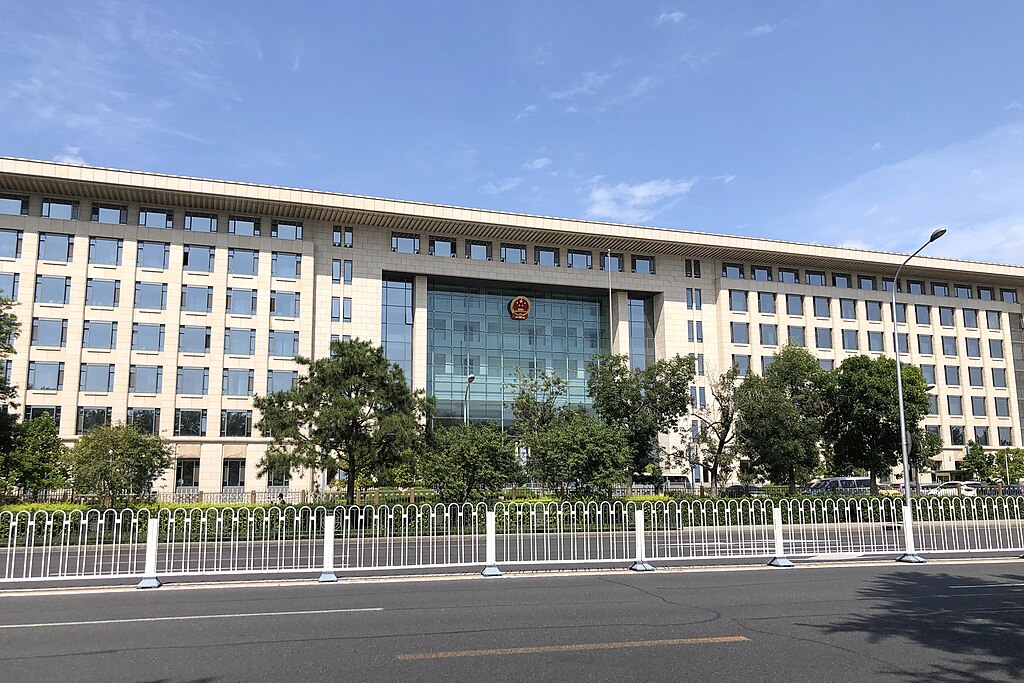
National People’s Congress Building, Tiananmen Square in Beijing, China | by N509FZ
China’s National People’s Congress has approved a landmark Value Added Tax (VAT) Law, set to take effect on January 1, 2026. This new legislation consolidates previous regulations into a unified framework, aligning China’s VAT system more closely with international standards and reflecting significant reforms in the country’s tax landscape.
HISTORICAL CONTEXT AND ENACTMENT JOURNEY
The VAT system was first introduced in China in 1994, initially covering the supply of goods. The system evolved in 2008, allowing businesses to recover input VAT on fixed assets, marking the first step towards a consumption-type VAT system. The Business Tax Convergence to VAT (B2V) pilot reform began in 2012, expanding VAT to cover services, and was fully implemented by 2016.
Discussions on formalizing VAT through a dedicated law began after the completion of the B2V reform. The first draft of the VAT Law was released in 2019, followed by several revisions. After extensive consultations and adjustments, the final version was passed on December 25, 2024.
KEY CHANGES IN THE NEW VAT LAW
1. Scope of Taxable Activities:
-
Current System: The VAT system covers the sale of goods, services, intangible assets, immovable property, and imports. Financial product sales are treated as services.
-
New Law: Maintains the same scope but provides clarity by treating financial product transactions as a distinct category of taxable activities.
2. Place of Supply:
-
Current System: VAT is applicable based on where a service “occurs,” leading to ambiguity.
-
New Law: Adopts the “place of consumption” approach, aligning with OECD guidelines, to determine the applicability of VAT, thus reducing ambiguity.
3. Deemed Taxable Transactions:
-
Current System: Includes a broad range of transactions such as consignment sales, capital injections, and free services.
-
New Law: Narrows the scope, excluding some transactions like consignment sales and inter-province transfers among branches.
4. Non-Taxable Items:
-
Current System: Exempts certain activities like administrative fees, salaries, and government funds.
-
New Law: Retains these exemptions but adds “compensation for expropriation or requisition in accordance with the law” as a new non-taxable item. Some previously exempt items are not included, potentially limiting the scope of non-taxable transactions.
5. Simplified Taxation Method:
-
Current System: Allows rates of 3% and 5% under simplified taxation.
-
New Law: Proposes a single 3% rate, simplifying the taxation process.
6. Withholding Agents:
-
Current System: The purchaser or agent of a non-resident supplier acts as the withholding agent.
-
New Law: Designates the purchaser or their appointed agent directly as the withholding agent, facilitating easier enforcement.
7. Input VAT Credits:
-
Current System: Certain services like loan services are non-creditable.
-
New Law: Restricts non-creditability to services purchased for personal consumption, allowing businesses to recover input VAT on loans and other services related to taxable activities.
8. Excess Input VAT Credits:
-
Current System: Excess input VAT credits can be carried forward but have limited refund options.
-
New Law: Allows for either carry-forward or refund of excess input VAT credits, streamlining the process.
9. Tax Periods:
-
Current System: Tax periods range from daily to quarterly filings.
-
New Law: Simplifies this by reducing the number of filing periods.
IMPLICATIONS AND FUTURE DEVELOPMENTS
The new VAT Law is expected to bring significant changes to the VAT landscape in China, impacting businesses and tax administration. The alignment with international standards, especially the OECD guidelines, is anticipated to enhance clarity and efficiency in tax collection.
The forthcoming Detailed Implementation Regulations, expected in the second half of 2025, are expected to provide further clarity on the application of the new law.
