
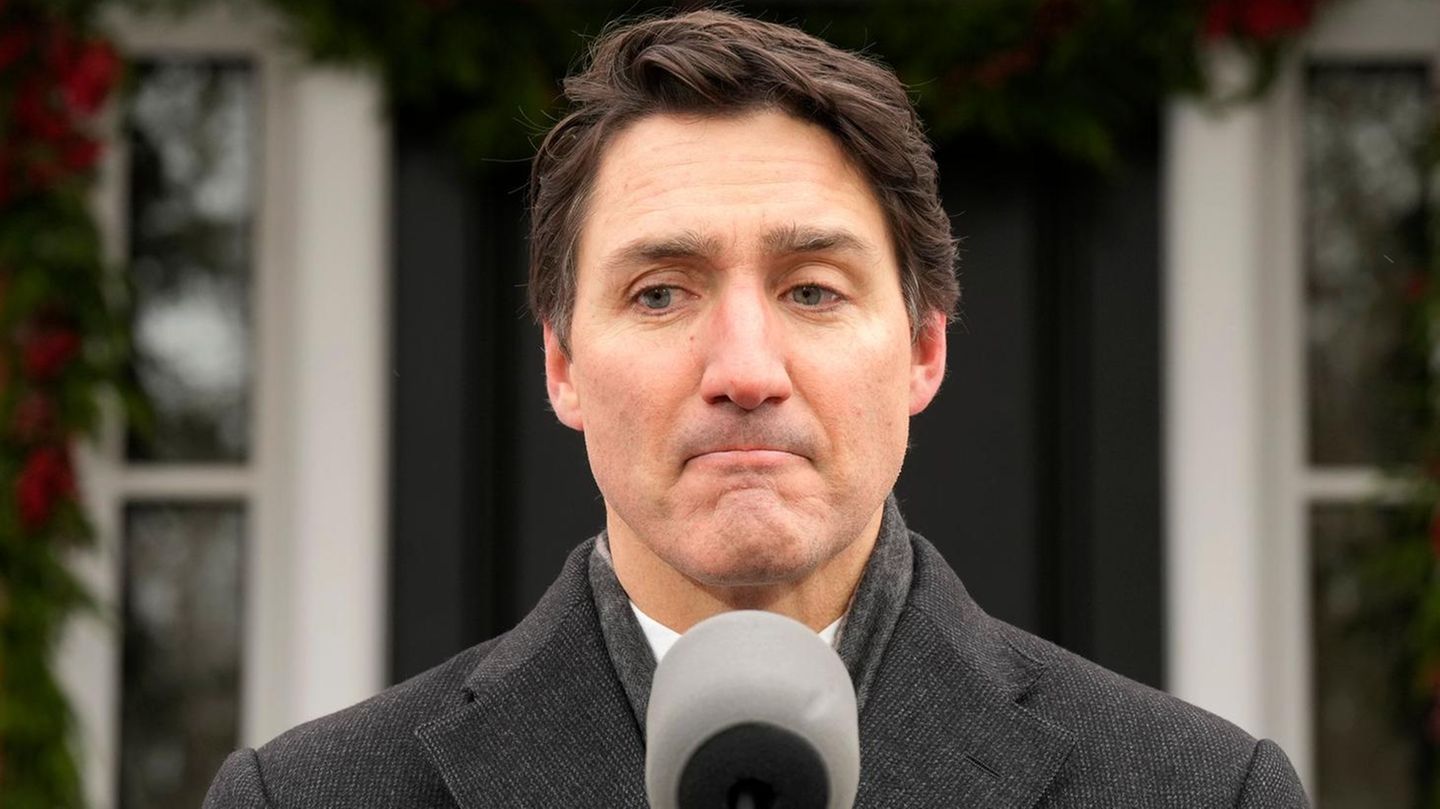
| Image credits: Justin Trudeau during his resignation announcement
Concerns are mounting within departing Canada´s Prime Minister Justin Trudeau’s administration over the looming possibility of Donald Trump imposing a 25% tariff on all Canadian imports once he assumes office. The apprehension stems from Trump’s rhetoric, where he lauded the effectiveness of tariffs, claiming they generated wealth and could eliminate national debt. He also mentioned economic measures against Canada, expressing hopes of it becoming the 51st state of the United States.
In light of these developments, Trudeau, despite announcing his resignation as Prime Minister and Liberal leader, has chosen to remain in office to navigate the complex transition period and address the tariff threat. The Canadian government had previously pledged over $1 billion for border security enhancements to address some of Trump’s concerns, but this funding is now uncertain due to the recent prorogation of Parliament.
CANADA’S RETALIATION STRATEGY
In response, Canada is preparing a list of retaliatory tariffs targeting U.S. goods, with Florida orange juice among the likely targets, a move designed to send a message to Trump’s base of power. This strategy echoes past actions from Trump’s first term, when Canada imposed tariffs on $16.6 billion worth of U.S. imports after American tariffs on Canadian steel and aluminum.
The federal government is contemplating an early release of this list to alert U.S. businesses of the potential repercussions and galvanize them to oppose the tariffs. This approach, discussed in a recent Canada-U.S. cabinet committee meeting attended by Trudeau, aims to apply pressure by signaling Canada’s readiness to counteract.
ECONOMIC AND POLITICAL IMPLICATIONS
The Canadian government has mobilized its diplomatic channels to highlight the negative impact of U.S. tariffs on American consumers and businesses.
Trudeau, reflecting on past tariff disputes, noted that strategically targeted retaliatory measures were instrumental in compelling the U.S. to lift protectionist policies. The government’s current plan mirrors this approach, aiming to inflict political and economic discomfort on key U.S. sectors to prompt a reassessment of the tariff strategy.
