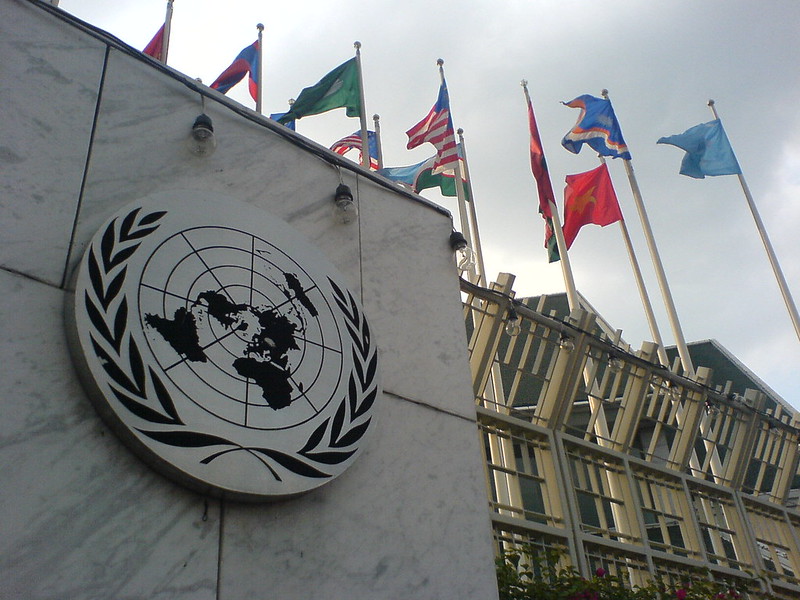
| Image Credits: “United Nation Building, Bangkok” by isriya
The European Union (EU) and its Member States have reaffirmed their strong commitment to promoting inclusive, fair, and effective international tax cooperation. In line with this commitment, October 8, 2024, the EU has approved its official position for the 79th session of the United Nations General Assembly, which will focus on the draft terms of reference for a UN Framework Convention on International Tax Cooperation. This proposed framework aims to strengthen global tax governance and promote a more coherent international tax architecture.
UN FRAMEWORK CONVENTION ON INTERNATIONAL TAX COOPERATION
The draft terms of reference, if adopted, would set the groundwork for the development of a new international tax treaty under the United Nations, targeted for completion by 2027. This treaty, known as the UN Framework Convention on International Tax Cooperation, would first need approval from the UN General Assembly. Following that, it would be opened for signature and ratification by all UN Member States, offering a global platform for enhanced tax collaboration.
EU’S KEY CONCERNS WITH THE TERMS OF REFERENCE
While the EU supports the initiative, it has expressed concern that certain key issues were not adequately addressed in the current terms of reference. These concerns include:
-
The need for consensus-based decision-making to ensure inclusivity and the effectiveness of the Framework Convention and its protocols.
-
Ensuring that commitments within the Convention remain of a high-level nature to avoid overly specific obligations.
-
A call for further analysis regarding substantive areas for both early and future protocols.
-
The importance of including taxpayer rights and safeguards to protect stakeholders’ interests.
COMPLEMENTARITY WITH EXISTING TAX COOPERATION INITIATIVES
The EU also stressed that the Terms of Reference should better reflect the principle of complementarity with ongoing international tax cooperation efforts. It is crucial that the work of the UN Committee complements other initiatives, such as those led by the OECD, to ensure the Framework Convention gains broad global participation and remains sustainable in the long term.
EMPHASIS ON TRANSPARENCY AND CONSENSUS IN NEGOTIATIONS
The EU emphasized the need for transparency and a common understanding in the negotiation process, as mandated by UN Resolution 78/230. Achieving a consensus-based decision-making process is seen as essential for the negotiation and adoption of the Framework Convention and its protocols. This would ensure that the final agreement is universally accepted and effectively implemented by a wide range of countries.
ADVOCACY FOR CONSENSUS-BASED DECISION-MAKING
In advocating for a consensus-based approach, the EU stressed that this method is vital to safeguard the stability and coherence of the international tax system. Consensus would facilitate broader participation and ensure that the Framework Convention is adopted and implemented in a manner that respects the interests of all parties involved.
CONSTRUCTIVE ENGAGEMENT FROM ALL UN MEMBER STATES
The EU called on all UN Member States to engage constructively in the development of the Framework Convention and its protocols. The Intergovernmental Negotiating Committee should operate under clear terms of reference that outline transparent, inclusive procedures. The EU also emphasized the importance of having the UN General Assembly require the Committee to follow a consensus-based decision-making process in its upcoming Resolution.
GLOBAL PARTICIPATION AND BALANCE OF INTERESTS
For the UN Framework Convention on International Tax Cooperation to be successful on a global scale, the EU highlighted the need for a fair balance of interests across all parties. Achieving this balance will help ensure broad participation, coverage, and implementation of the treaty by 2027, fostering stronger international tax governance and collaboration worldwide.
