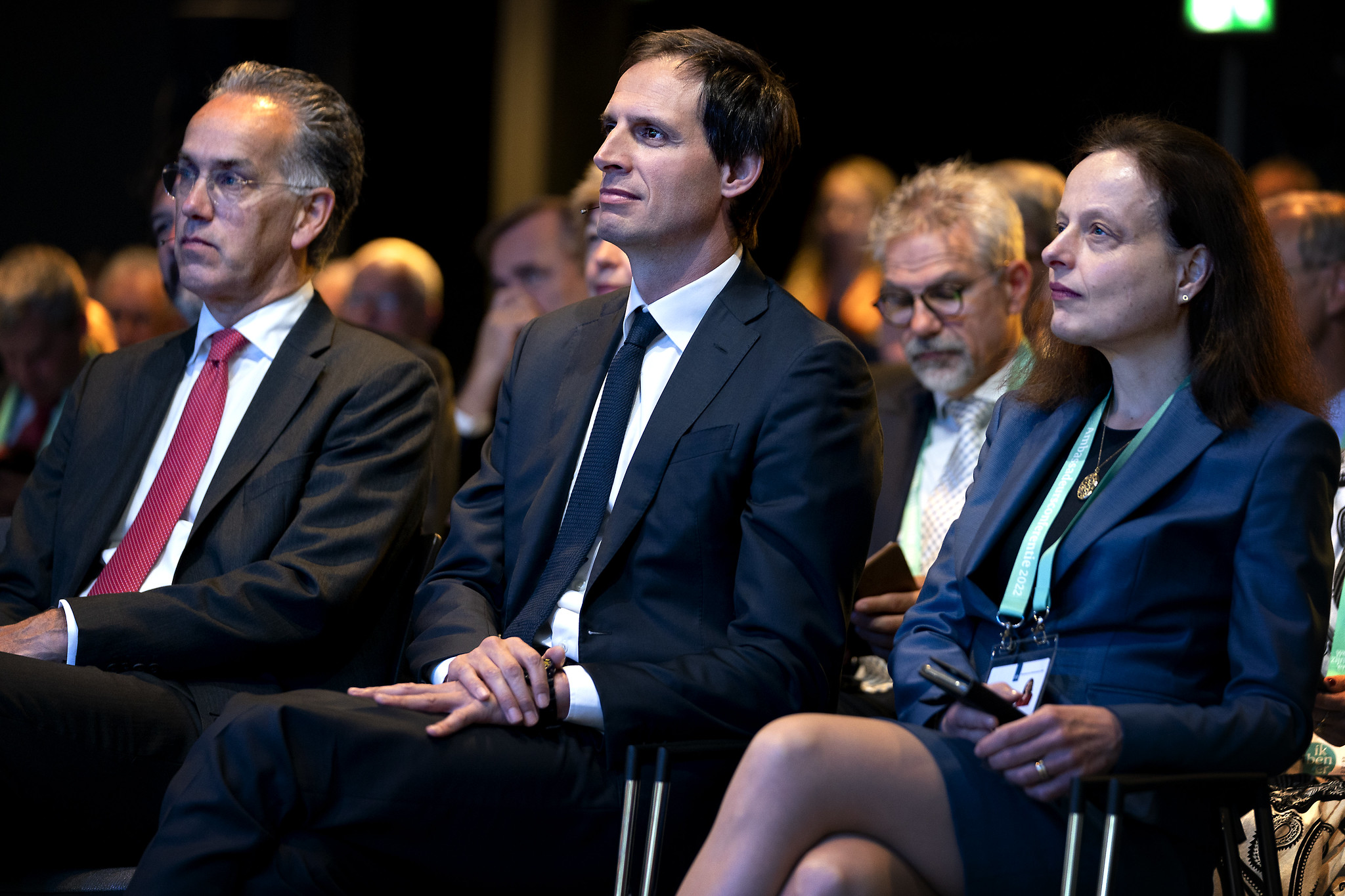
| Image credits: Dutch politician Wopke Hoekstra (middle) by Ministerie van Buitenlandse Zaken is licensed under CC BY-SA 2.0.
The European Commission recently announced its new Commissioners for Ursula von der Leyen’s second term as President. Once again, taxation has been reassigned, now grouped in an unexpected portfolio with Climate, Net Zero, and Clean Growth. Pierre Moscovici held the role of Commissioner for Economic and Financial Affairs, Taxation, and Customs until 2019. However, during von der Leyen’s first term (2018-2024), Taxation and Customs were transferred under the Commissioner for Economy, effectively removing taxation from the Commissioner’s title.
For von der Leyen’s second term, Dutch politician Wopke Hoekstra has been appointed as Commissioner for Climate, Net Zero, and Clean Growth.
In Hoekstra’s mission letter, dated September 17, 2024, Taxation appears last, following extensive mentions of other priorities. The letter states briefly: “You will also be responsible for taxation and work to ensure our tax system plays a crucial role in supporting Europe’s competitiveness, prosperity, and social fairness.”
Key priorities outlined in the document include:
-
Leveling the playing field in energy taxation and strategically using tax measures to encourage the adoption of clean technologies, as well as concluding negotiations on the Energy Taxation Directive (connecting taxation to climate goals?).
-
Developing innovative solutions for a coherent tax framework in the EU’s financial sector.
-
Continuing efforts on corporate tax reform, particularly by concluding negotiations on the corporate tax package.
-
Ensuring Europe maintains high ambitions in combating tax fraud, evasion, and avoidance, and leading the way in better tax information collection and sharing, particularly through digital tools and AI.
-
Collaborating with Member States on the implementation of the global agreement on international tax reform, which introduces a minimum effective tax rate for multinational corporations operating in the EU.
These priorities are relatively modest and appear less ambitious compared to those assigned to the Commissioner in other areas. With the requirement for unanimity in taxation matters at the EU level, it seems the European Commission focusing toward areas where it can exert more influence and achieve quicker results.
